Collector guides
Polish Elektrometal (EM) benzine lamps: reading the stamps and spotting the copies

Polish Elektrometal (EM) flame safety lamps turn up everywhere, from eBay and Kleinanzeigen to the odd Aussie market table. Some get sold as rare German or French pit lamps.
Karl Heupel’s German lamp wiki has a handy page on them. Here are the best bits, translated and boiled down.
Who made them
- Zakład Telemechaniki Górniczej “ELEKTROMETAL”, Cieszyn, Poland, stamped “EM”.
- Made in iron, brass and aluminium, with flint (ferro-cerium) or electric igniters. Types include LB1, LB2, LB1A, LB1K, LBE1 and a string of BM/BS approval numbers.
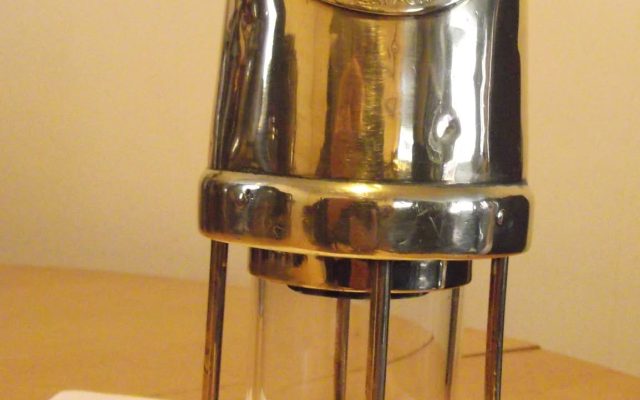
- Shiny chrome lamps were made for special occasions, like a mine director’s farewell. They’re presentation pieces, not pit-worn lamps.
Reading the stamps
- “BM” (Bezpieczeństwo Metanowe, methane approval) was used until the end of the 1970s, then “BS”, and from the 1980s “EX-KD-xxxxxx”.
- A type stamp like LB-1A-044/59-7-78 reads: Lampa Benzynowa (benzine lamp) type 1A, part number 044/59, made in month 7 of 1978.
- The glass is often marked HSW, for the Wołomin glassworks.
Original or copy?
- Filler tube: on originals it’s slotted under the sieve. On copies it’s usually soldered in solid, with no milled recess for the sealing ring.
- Rivets: much higher rivet heads on copies.
- Igniter: copies often have newer igniters with much thinner flints, frequently held with Phillips (cross-head) screws.
- EM supplied parts to a Benelux dealer who assembled lamps, and Holzmann of Saarbrücken sold them as gift lamps. Some carry a “KW” stamp, and what KW stands for is still argued about.
- A copy of the Friemann & Wolf Type 400 is being sold as a “Westfälische Steigerlampe” (Westphalian deputy’s lamp).
The French trick
Polish lamps never had French approval, so a Polish lamp with a French pit name on it (Oignies, St Étienne, Blanzy, Gardanne, Merlebach, Valenciennes…) has been dressed up to mislead buyers.
Tips from other German collectors
- Some sellers drill out type numbers, file off punch marks, strike new ones, or cover them with solder to hide where a lamp came from.
- Seippel lamps were copied in Taiwan. A lamp with several Phillips-head screws is a “hands off”.
- On the GAG forum, an EM lamp with no works engraving, no struck numbers and no magnetic lock was judged most likely a gift lamp: not exactly a fake, but not a pit lamp either. Pit lamps were registered and carry the mine’s markings.
Our two bob. A genuine plain EM lamp is a common, honest lamp and a good starter. Just pay EM prices, not “rare French pit lamp” prices. Got one? Post photos of the filler tube and the stamps in the Facebook group and we’ll help read it.
Credit. Translated and summarised from “Elektrometal” on Karl Heupel’s Grubenlampen wiki, with thanks there to Martin Benes, Alex Wagner, Christian Hoerger and Adam Kopczynski.