Pit ponies: a bridle, two names and non-sparking shoes
Following John Kathage’s article on pit ponies in the Facebook group, Bosuns Mate shared these pictures and memories.
Ace and Pilot
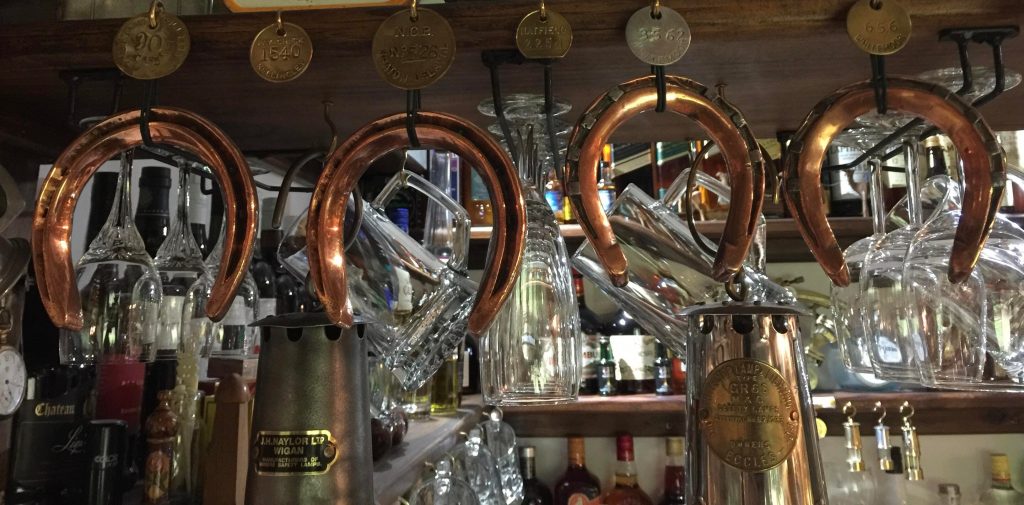
This bridle hung in the bar of a pub near Barnsley, a gift to the landlady from a customer. It carries two names, Ace and Pilot. Either the two ponies shared it, or one retired or died and the bridle was handed on.
The last ponies
The last ponies working underground in England came out of Ellington Colliery, Northumberland, in 1994. In Wales, the last two ponies, Robbie and Gremlin, retired from a small private mine near Pontypool in 1999.
“I used to work with them quite often. We had over 100, from 8½ hands to 14 hands.” (A pony is generally counted a horse above 14.2 hands.) “At Ashington Colliery, where I did my training, I was told they had over 600, but they had 4,500 men underground too.”
The saddest story
An ex-colliery manager named Thompson, who taught at the local mining school, wrote a book called How Long Did the Ponies Live. It tells of a shaft collapse at a mine just north of Newcastle. The men were lucky to get out. They left all the “choppy” (chopped feed) and as much water as they could find for the ponies, and had to run. They were never able to get back.
Shoes that wouldn’t spark
Where there might be gas, the farrier fitted shoes made of beryllium copper, an alloy that doesn’t strike sparks. They were very expensive, and steel shoes went back on when the job was done. The small shoes, and they are very small, came from Scotland. The larger ones came, Bosuns Mate was told, from the deepest pit in Lancashire, which he believes was Parsonage Colliery.
Beryllium-copper tools such as hammers, chisels, spanners and bricklayers’ tools were used the same way in return airways, and had to be handed back after every job.
Photos


Gallery
Credit. Information and photos: Bosuns Mate.